Keep Our Service Free-Donate

Friday, April 15, 2016

We don't need another election, We need another revolution


Poor Man Survival

Self Reliance tools for independent minded people…


ISSN 2161-5543

A Digest of Urban Survival Resources

Anyway, no drug, not even alcohol, causes the fundamental ills of society. If we're looking for the source of our troubles, we shouldn't test people for drugs, we should test them for stupidity, ignorance, greed and love of power.

>P. J. O'Rourke


“Let me ask America a question,” Trumps begins. “How has the ‘system’ been working out for you and your family? No wonder voters demand change.”

I, for one, am not interested in defending a system that for decades has served the interest of political parties at the expense of the people. Members of the club—the consultants, the pollsters, the politicians, the pundits and the special interests—grow rich and powerful while the American people grow poorer and more isolated.

>>Wall Street Journal OP/ED  April 14, 2016

Those that were hoping for an “economic renaissance” in the United States got some more bad news this week.  It turns out that the U.S. economy is in significantly worse shape than the experts were projecting.  Retail sales unexpectedly declined in March, total business sales have fallen again, and the inventory to sales ratio has hit the highest level since the last financial crisis.  When you add these classic recession signals to the troubling indicators [retail store closings, spike in unemployment numbers] in the U.S. economy, it paints a very disturbing picture.  Virtually all of the signs that we would expect to pop up during the early chapters of a major economic crisis have now appeared, and yet most Americans still appear to be clueless about what is happening.

 I was surprised when the government reported that retail sales had actually fallen in March.  Consumer spending is a very large part of our economy, and so if consumer spending is slowing down already that certainly does not bode well for the rest of 2016.  The following comes from highly respected author Jim Quinn

The Ivy League educated “expert” economists expected March retail sales to increase by 0.1%. They only missed by $6 billion, as retail sales FELL by 0.3%. They have fallen for three straight months. At least gasoline sales were strong, as prices have risen 22% since mid-February. That should do wonders for the finances of American households. If you exclude gasoline sales, retail sales fell by 0.4%. As the chart below reveals, the year over year change in retail sales has been at or near recessionary levels for most of 2015, and into 2016.


You can view the chart that he was referring to right here.  In addition to a decline in retail sales, total business sales have also been falling, and this is another classic recession signal.  The following comes from Wolf Richter

Total business sales fell again in February, the Commerce Department reported today. They include sales by manufacturers, retailers, and wholesalers of all sizes across the US economy. This measure is far broader than the aggregate sales by publicly traded companies, which too have been falling.

At $1.284 trillion in February, total business sales were down an estimated 0.4% from January, adjusted for seasonal and trading-day differences but not for price changes. And they were down 1.4% from the already beaten-down levels of February last year. They’re back where they’d first been in November 2012!

Yes, the stock market has been on quite a run for the past several weeks, but that temporary rebound is not based on the economic fundamentals.

The truth is that the real economy is definitely starting to slow down substantially.  If you want to break it down very simply, less stuff is being bought and sold and shipped around the country, and that tells us far more about what is coming in the months ahead than the temporary ups and downs of stock prices.

 
More people are

stocking up on gold


Another huge red flag is the fact that the inventory to sales ratio in the U.S. has hit the highest level that we have seen since the last financial crisis

The crucial inventory-to-sales ratio, which tracks how long unsold inventory sits around in relationship to sales, is now at a mind-bending 1.41. That’s the level the ratio spiked to in November 2008, after the Lehman bankruptcy in September had put the freeze on the economy.

Inventories represent prior sales by suppliers. When companies try to reduce their inventories, they cut their orders. Suppliers see these orders as sales. As their sales slump, suppliers adjust by cutting their own orders, thus causing the sales slump to propagate up the supply chain. They all react by cutting their expenses. And if it lasts, they’ll cut jobs. Inventory corrections have a nasty impact on the overall economy.

Because sales have slowed down, inventories are starting to pile up to alarmingly high levels.  And when companies see that business is slowing down, they start to let people go.

Challenger, Gray & Christmas is reporting that job cut announcements at major firms in the United States are up 32 percent during the first quarter of 2016 compared to the first quarter of 2015. Ford Motor announced it was shipping jobs to Mexico and Oreo Cookies is closing its US production facility as well and shipping roughly 400 jobs to Mexico.

Somehow, most of the talking heads on television don’t seem too alarmed by this.

But ordinary Americans are beginning to become alarmed about what is happening.  In fact, the percentage of Americans that believe that the U.S. economy is “getting worse” is now the highest it has been since last August


One of the more glaring examples of how strong pessimism has become is Gallup’s U.S. Economic Confidence Index. The measure gauges the difference between respondents who say the economy is improving or declining. The most recent results are not good.

Fully 59 percent say the economy is “getting worse” against just 37 percent who say it is “getting better.” That gap of 22 percentage points is the worst since August, according to Gallup, which polled 3,542 adults.

So far, it is less severe than what most of the rest of the planet is experiencing.  Japan’s GDP is officially shrinking, major banks are failing all over Europe and the same is taking place in Brazil and parts of the EU.

On a smaller scale my associates tell me they see it locally with reduced retail sales, lower online sales and even higher numbers of delinquent payments on mortgages and auto loans.

While the Republican party dithers and squabbles it is highly evident that a growing percentage of Americans are disgusted by career politicians and government as usual which are high on promises but short on promises…50 years of the same nonsensical campaign crap and all we get is a reduction in our spending power and a reduction in our freedoms is what I continue to hear…our government is broken, ruled by money and special interests without regard to the people.  However…

You can’t cure an alcoholic with more alcohol.

You can’t cure government overreach with more government.

This November, a new president-elect will make grand promises, but he or she will sit at the top of the world’s biggest bureaucracy.

Not even a president has the power to rescue our republic. Congress has failed. The Supreme Court is the great enabler.

For them, the system works. As for us? We lose more liberty every day.


As I’ve said for 25 years…

We don’t need another election, We need another revolution!


Bruce ‘the Poor Man’


If you enjoy the resources we present, help support our efforts by making a purchase…

Books, Art, Video – the saucy, the odd, the retro, even the practical…


A Smoking Frog Feature, Shallow Planet Production


My gift to you:

The Poor Man’s Essential Survival Package


--The Doctors Protocol: Secrets of Survival

--How to Survive the Coming Economic Collapse

--Guide to Self Reliant Living

--Becoming Self Sufficient for Six Months

--How I Found Freedom in an Un-free World

Thursday, April 14, 2016

What Our Income Tax System is Truly About & How You Can Reduce the Pain


Poor Man Survival

Self Reliance tools for independent minded people…


ISSN 2161-5543

A Digest of Urban Survival Resources

 
"To lay with one hand the power of government on the property of the citizen, and with the other to bestow it on favored individuals...is none the less robbery because it is called taxation."
-- United States Supreme Court


That Giant Sucking Sound We Hear in America is our Outdated & Unfair Tax System…it is Killing Business & Job Creation


Of course our tax system was never intended to be like this anyway.  Our Founders hated taxes, and they fought a very bitter war to escape the yoke of oppressive taxation.  During his very first inaugural address, Thomas Jefferson clearly expressed what he thought about taxes…

A wise and frugal government… shall restrain men from injuring one another, shall leave them otherwise free to regulate their own pursuits of industry and improvement, and shall not take from the mouth of labor the bread it has earned. This is the sum of good government.

Why couldn’t we have listened to him?

When the federal income tax was originally introduced a little more than a century ago, most Americans were taxed at a rate of only 1 percent and could be done on the back of a post card.  In fact, the first IRS commissioner announced to the American public that the income tax “would never affect anyone other than the top one percent of income earners!”

The Supreme Court, in the late 1890s, ruled three times against an income tax on ordinary citizens so the jerks in Congress passed an amendment to fleece the citizens.


As the Founders of our country knew, freedom can only be securely grounded on inalienable rights. At the very least, a free economy means the right to liberty and property -- not as contingent or subject to government defined duties or responsibilities -- but as absolute. But since these rights are no longer secure in America, our economic freedom is tentative, subject to revocation at government caprice.

The institution of private property has been most subverted, beginning with the income-tax amendment of 1913, which contains no legal barrier to the government’s confiscating all American income. Only public opinion stands in the way.

The great libertarian Frank Chodorov called the income-tax amendment the “Revolution of 1913” that undid the “Revolution of 1789.”

Our tax system has evolved from a program of raising money to operate a bloated government and overly generous salaries and pensions of politicians and bureaucrats to a system of reward and punishment and social engineering.  It’s all about control.

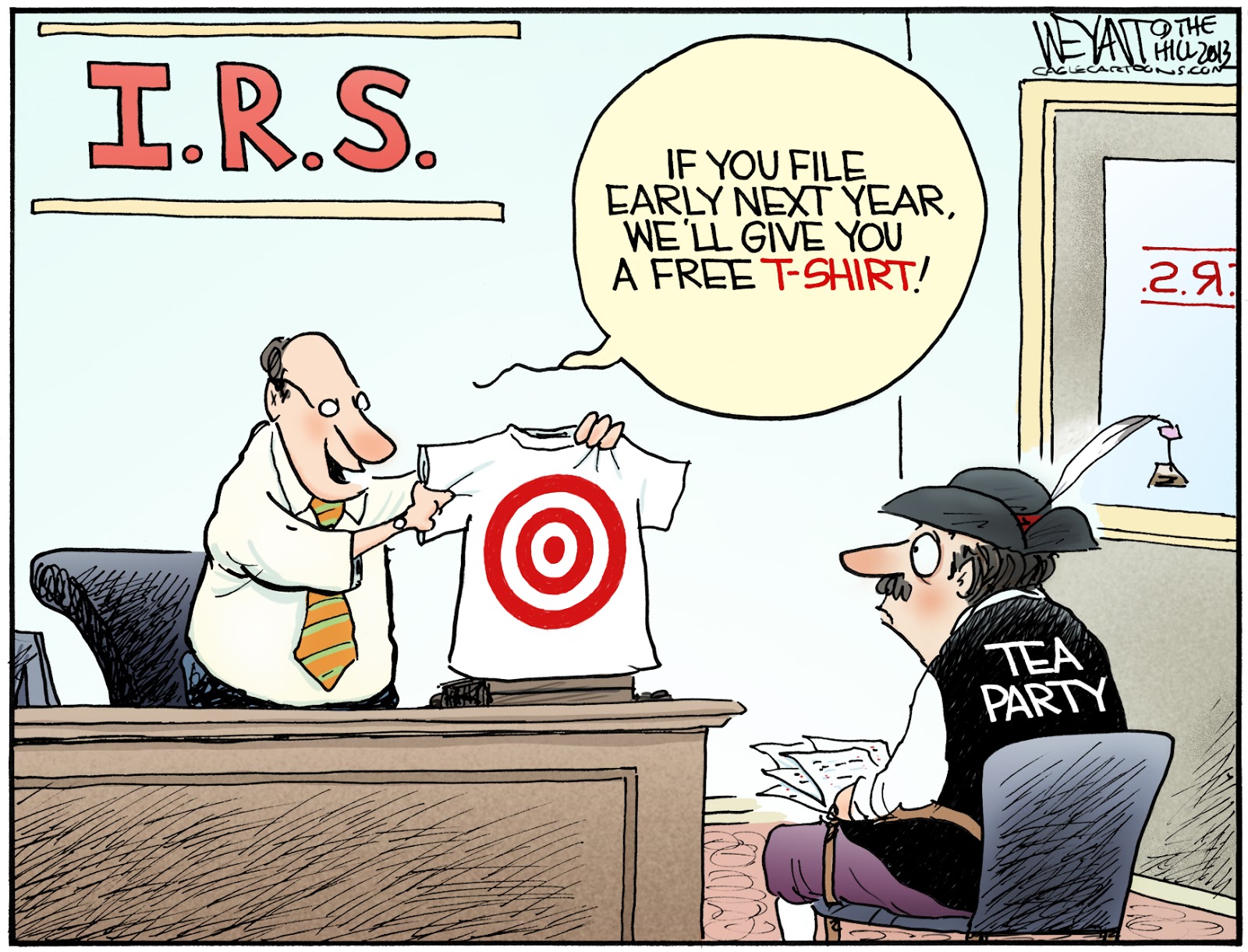
The poorly conceived and operated Obamacare program is a perfect example.  Overly complex and riddled with glaring errors such as the lack of Tort Reform, many Americans are unable to afford premiums and several states failed to offer subsidies yet  Obama uses the IRS as an enforcement arm to track and punish citizens who do not comply with his plan

It doesn’t require much mathematical skill to see how skewed and antiquated our system is and that by all rights it needs to be scrapped altogether and replaced with something along the lines of a flat tax program or national sales tax…after all, the nation managed to get along without an income tax for much of its existence.

Further, our system of taxation and regulatory nature at the state and federal level has become the great barrier to business startup, greatly curtailing our once great job creation engine –small business!  The United States now ranks 13 in the world in terms of free enterprise behind Hong Kong and New Zealand!

Up until the 1960s American corporations shouldered the bulk of taxes until they managed to buy off enough politicians to shift the burden to the middle class.  Eventually, most of the Fortune 500 incorporated to countries with a friendlier tax status leaving the poor schmucks on mainstreet to pick up the slack of huge government spending. [Although, based on the most recent Panama papers, certain US states now appear to have become mighty friendly to the all powerful elite].

Three quick facts about our taxes that come from the Tax Foundation

-This year, Tax Freedom Day falls on April 24, or 114 days into the year (excluding Leap Day).

-Americans will pay $3.3 trillion in federal taxes and $1.6 trillion in state and local taxes, for a total bill of almost $5.0 trillion, or 31 percent of the nation’s income.


The Sky-High Cost of

Government

The Tax Foundation, a nonpartisan, DC-based think tank, released their annual report earlier this month and it contained some sobering realities about the cost of government.

They reported that, in 2016, Americans will pay over $3.3 trillion in federal taxes and $1.6 trillion in state and local taxes, for a grand total of almost $5.0 trillion, or 31 percent of the nation’s income.

To put these numbers in perspective, here is the most incredible revelation from their report:

“Americans will collectively spend more on taxes in 2016 than they will on food, clothing, and housing combined.”

That last statistic is a huge sore point with me.

How can anyone argue that we are not a socialist society when the government takes more of our money than we spend on food, clothing and housing combined?

What they are doing to us is deeply wrong and it is fundamentally un-American.

And of course the elite have the resources to be able to hire very expensive tax attorneys that help them manipulate the game in their favor.  At the end of the day, many extremely wealthy Americans end up paying a much lower percentage of their income to the government than you or I do.

For example, just consider what the Clintons have been doing

The Clintons and their family foundation have at least five shell companies registered to the address 1209 North Orange Street in Wilmington, Delaware — which is also home to some 280,000 other companies who use the location to take advantage of the state’s low taxes, limited disclosure requirements, and other business incentives.

Two of the five are tied to Bill and Hillary Clinton specifically. One, WJC, LLC, is used by the former president to collect his consulting fees. The other, ZFS Holdings, LLC, was used by the former secretary of state to process her $5.5 million book advance from Simon & Schuster. Three additional shell companies belong to the Clinton Foundation.

One could argue that they are simply “playing the game”, but why do we have to play such a complicated game in the first place?

Another thing that frustrates me is how our tax money is being wasted.  Speaking of the Clintons, did you know that Bill Clinton still receives close to a million dollars from the federal government every year?  Since he left office in 2001, he has been given approximately 16 million of our tax dollars.

Does that seem right to you?

Of course there are other examples that should make us all sick as well.  Tens of millions of our tax dollars have been spent on Obama vacations.


Despite increases in tax revenue collection and assurances from President Obama, whose past bailouts and financial failures indicates his poor grasp of economics…the U.S. economy is in very serious trouble.  As I indicated in an earlier report we have dozens of major retailers which are either going bankrupt or are closing retail locations or like Ford Motor and Nabisco [Oreo Cookies] have announced they are sending more US jobs to Mexico while laying off US workers!

Read what Societe Generale economist Albert Edwards is saying

A tidal wave is coming to the US economy, according to Albert Edwards, and when it crashes it’s going to throw the economy into recession.

…the profit recession facing American corporations is going to lead to a collapse in corporate credit.

“Despite risk assets enjoying a few weeks in the sun our fail-safe recession indicator has stopped flashing amber and turned to red”


He continued:

Whole economy profits never normally fall this deeply without a recession unfolding. And with the US corporate sector up to its eyes in debt, the one asset class to be avoided — even more so than the ridiculously overvalued equity market — is US corporate debt. The economy will surely be swept away by a tidal wave of corporate default.

Economic chaos is erupting literally all over the planet, and global leaders are starting to panic.

The dollar is collapsing, so is the global economy and the US has never recovered from its current depression. Top officials at such important banks as Citicorp have declared the US economy is in a “death spiral.”

And by the way, since fewer citizens qualify or choose to have bank accounts…

Last week, the IRS announced that taxpayers who don’t have a bank account or credit card can now pay in cash not only at IRS offices but at more than 7,000 participating 7-Eleven stores in 34 states.

“Taxpayers have many options to pay their tax bills by direct debit, a check or a credit card, but this provides a new way for people who can only pay their taxes in cash without having to travel to an IRS Taxpayer Assistance Center," said a statement from IRS Commissioner John Koskinen.

That said, you can’t just show up and pay your tax bill along with a Big Gulp. “There are several steps involved in the process,” USA Today reports, “including clicking onto the IRS payment page to submit personal information and receiving an emailed link to a payment code.

“Once they've paid, taxpayers will get a receipt and the payment should post within two business days.”

Since our plantation masters are tightening controls on us poor serfs and tracking everything we do via the ever present and growing use of the socialist slave number [in direct violation of the Privacy Act of 1974] I always strongly urge everyone to have one or more of the following [just like the Clinton’s]:

·        A sideline business

·        A non-profit organization or foundation [I had/have my own private foundation but pretty much exhausted its cash by making donations [before I had my triple bypass heart surgery & implant] and $5,000 grants to various Veteran groups & other charities]

·        A means of doing business outside the banking system-cash, gold and silver, gift cards, barter, bitcoin, etc.

Any of the above will give you some credible and viable tax tools to work with.  Remember:  Always use a qualified tax planning professional to assist you.


No matter who wins the White House, we can count on two things as certainties: The government will grow and “the other half” will be pissed off… taking other people’s money by force is not the “cure-all” that fixes society’s ills. And instead, only tends to cause resentment, division and more poverty. (A full century of failed policies should’ve proven this point, but who cares about facts when it’s other people’s money.  The failed Democrati policies in such cities as Detroit should act as a reminder...Neither party have proven good stewards of the public trust or our public funds.  Frankly, I no longer trust either of them.


Our first tax form!


Additional Resources:


Many Americans have decided to leave the country rather than face the ever increasing rules and regulations, the lack of decent jobs and benefits and some of the best opportunities according to International Living’s 2016 Global Retirement Index include:  Panama, Ecuador and Costa Rica [many US retired military choose to live in Costa Rica where medical care, food, housing and entertainment costs are much lower than in the USA]  The cost of living in the United States continues to rise while freedoms continue to erode…another resource to look at is…

 
Simon Black


Escape the Rat Race With Your Own Home Business

>Special price for our readers: Only $5 From a program I delivered to US veterans & others!


AMERICA — From Freedom To Fascism (Full Length Documentary)


Is there a law which requires you to pay the Federal Income Tax? Is the Federal Reserve a part of the United States Government, or is it a private bank owned and operated by multinational corporate interests? Do they have our nation's best interests at heart?


Yours for better living,

Bruce ‘the Poor Man’


Find a variety of self reliance books and other items at our storefront-free shipping on everything.

If you enjoy the resources we present, help support our efforts by making a purchase…

Books, Art, Video – the saucy, the odd, the retro, even the practical…


A Smoking Frog Feature, Shallow Planet Production


Tuesday, April 12, 2016

Situational Awareness Can Save Your Life


Poor Man Survival

Self Reliance tools for independent minded people…


ISSN 2161-5543

A Digest of Urban Survival Resources

“People never notice anything.” J.D. Salinger


How to Develop Situational Awareness


   Law enforcement reports that crimes against persons have increased in recent years because so many people have come distracted by their smart phones.  Everywhere one looks, citizens have become zombie-like, staring at their phone as if it were an addictive force making them oblivious to their surroundings and making them easy targets for muggers, rapists and thieves.

Many of the resources out there on situational awareness say it can be cultivated by generally keeping tabs on your surroundings — “checking your six” and “keeping your back to the wall.”

This definition isn’t wrong. That’s exactly what situational awareness is: knowing what’s going on by scanning your environment. But I always found this explanation lacking. What exactly am I looking for? How do I know if I’m paying attention to the right things? Are there behaviors or warning signs of an imminent threat that I should know about?

Today we’re going to start by discussing the general principles of increasing your observational abilities, and then dive deeper into situational awareness itself to answer these important questions.


Observe + Orient = Situational Awareness


The thing that helped me finally understand situational awareness was framing it within the OODA Loop. For those of you who haven’t read my in-depth article on this important cognitive tool, here’s the CliffsNotes version:

The OODA Loop is a learning system and decision-making process that was first laid out by Air Force fighter pilot and military strategist John Boyd. The four steps of the OODA Loop are Observe, Orient, Decide, Act. In a head-to-head competition, like air-to-air combat, a violent confrontation in a parking lot, or even political contests, the person who can cycle through the OODA Loop the fastest wins.

Obviously, the Observe step in the loop is what most people associate situational awareness with.

But it’s the second step in the OODA Loop – Orient — that answered my questions about what developing situational awareness actually involves. Orientation tells us what we should look for when we’re observing, and then puts those observations into context so we know what to do with the information.

So Observe + Orient = Situational Awareness.

But how can we become better observers so that we can improve our situational awareness? And how should we orient ourselves so that we observe the right things and understand the context for what we’re seeing?

Observe: Stay in Condition Yellow 


In his seminal book, Principles of Personal Defense, gun-fighting expert Jeff Cooper laid out a color code system to help warriors gauge their mindset for combat scenarios. Each color represents a person’s potential state of awareness and focus:

For optimal situational awareness, Cooper recommends that we always stay in Condition Yellow.

Condition Yellow is best described as “relaxed alert.” There’s no specific threat situation, but you have your head up and you’re taking in your surroundings with all your senses. Most people associate situational awareness with just visual stimulation, but you can also learn a lot about a particular scenario from the sounds (or lack thereof) and even smells in the environment.

Even though your senses are slightly heightened in Condition Yellow, it’s also important to stay relaxed. By adopting a calm demeanor, you won’t bring any unnecessary attention to yourself. If you look antsy and your head is swiveling frantically while you scan your surroundings, people are going to notice you. Additionally, staying relaxed ensures that you maintain an open focus, which allows you to take in more information about what’s going on around you. Research shows that when we get nervous or stressed, our attention narrows, causing us to concentrate on just a few things at a time. A narrow focus can therefore cause us to miss important details in our environment

Put yourself in a position for optimal observation. To achieve effective situational awareness, you need to be able to observe as much of your surroundings as possible. Positioning yourself in obstructed spots will inhibit the flow of information coming in. For example, something might be in your way that prevents you from seeing a bad guy enter a theater or restaurant. You also don’t have eyeballs in the back of your head, so you can’t see what’s going on behind you.

So whenever you enter an environment, put yourself in a position that will allow you to see as much as you can. My buddy Mike Seeklander at Shooting Performance recommends finding a place where you can view all or most of the exit points, and that allows you to put your back to the wall. This position readies you to make a quick getaway, and eliminates the possibility of failing to see a threat materialize behind you [better than Wild Bill Hickcock who let his guard down and failed to have his back against the wall and got shot by a coward while gambling in a saloon].

Granted, this isn’t possible in all situations. You don’t have much control as to which table a restaurant hostess seats you at on a busy night, and you’d likely get a lot of strange looks if you stood with your back in a corner while you’re waiting in line at Five Guys. So do your best within the given circumstances. In that busy restaurant, you might not have control of your table location, but you can choose which seat you take. Pick the chair that gives you the best view from your table. When you’re standing in line at a fast food restaurant, just nonchalantly look around and take in the scene.

Hone your observation skills by playing the A-Game. Mike plays a game with his kids called the “A-Game,” or Awareness Game, to help them (and himself) strengthen their observational skills. To play, when you go into a business, make note of a few things about your environment: the number of workers behind the counter, the clothing and gender of the person sitting next to you, how many entry/exits there are, etc. When you leave and get into the car to head home, ask your kids questions like “How many workers were behind the counter?” “Was the person sitting next to us a man or a woman?” “What color was his/her shirt?” “How many exits were there?”

It’s fun to play, but more importantly it’s training your kids (and you) to be more mindful of their surroundings.

Master memorization. Another fun activity that will help improve your situational awareness is to practice memorizing things. Bourne knew all the license plate numbers of the cars outside the diner. You can gain this skill by practicing with a deck of cards, or strings of numbers. Here’s a guide on how to gain the ability to memorize anything you want.


Orient: Baselines, Goals, and Action Plans


Being more observant isn’t enough to master situational awareness. You have to know what you’re looking for, and then put that information into context so it has meaning and becomes actionable. That’s where the Orient phase comes into play.

The Orient step provides three things to help us achieve situational awareness: 1) baselines and anomalies for our particular environment, 2) mental models of human behavior we should look for, and 3) plans of action depending on our observations.

Establish a Baseline Wherever You Go


Every environment and person has a baseline. A baseline is what’s “normal” in a given situation, and it will differ from person to person and environment to environment. For example, the baseline at a small coffee shop will usually entail people reading a book or working on their computer or speaking in hushed tones with their friends. The baseline at a rock concert would be loud music and people looking at the stage while either jumping up and down to the music or swaying their bodies to the beat.

We establish baselines so that we can spot anomalies. According to Patrick Van Horne, situational awareness expert, instructor of the Marine Combat Profiling system, and author of Left of Bang, “Anomalies are things that either do not happen and should, or that do happen and shouldn’t.” Anomalies are what direct our attention as we take in our surroundings and what we need to focus on to achieve situational awareness.

So the first step in orienting ourselves is to establish baselines so that we can direct our attention to anomalies. How do we do that on the fly? Van Horne suggests that you mentally ask yourself these questions every time you enter a new environment:

  • Baseline Questions: What’s going on here? What’s the general mood of the place? What’s the “normal” activity that I should expect here? How do most people behave here most of the time?
  • Anomaly Question: What would cause someone or something to stand out?

Behavioral Clusters to Look For


Our inability to pay attention to everything all at once makes it impossible to obtain complete situational awareness. The human mind can only handle so much information at a given time. Thus in the domain of personal safety, where things unfold quickly and seconds are often the difference between life and death, how we direct our attention is paramount.

So we need to focus on a few things at a time that provide the most bang for our attentional buck. And we do that, Van Horne argues, by relying on heuristics. Heuristics are quick and dirty problem-solving and decision-making mental shortcuts our minds use to figure things out when minimal information is available and time is limited. Decisions made from heuristics aren’t always perfect, but in the context of your personal safety, they’re usually good enough.

In Left of Bang, Van Horne lays out six domains of human behavior that Marine Combat Profilers use on the battlefield in order to quickly determine whether someone is a friend or foe. To get an idea of what civilians should look for in everyday situations, I interviewed Van Horne for this article. He told me the most important category of clues is what he calls kinesics, an area of behavior that involves people’s conscious and subconscious body language.

Within the domain of kinesics, three clusters of body language are of particular interest for situational awareness. They are: dominance/submissive behavior, comfortable/uncomfortable behavior, and interested/uninterested behavior.

Dominance/submissive behavior. Generally, most people try to get along with others, so for the most part people act in accommodating and submissive ways. Van Horne writes that dominant behavior “is an expression of the limbic system’s fight response” and often manifests itself in “gestures and postures that make a person look larger to intimidate ‘smaller’ individuals into submission.” Smaller vs. bigger here doesn’t just apply to physical size, however, but also relates to relative positions of power.

Because most people get along to get along, dominant behavior often constitutes an anomaly, and the person displaying it deserves more attention. If someone acts in a pushy, authoritative, or overbearing way, it doesn’t necessarily mean they’re a threat; context matters. You’d expect a boss to act dominant in relation to their employees and the employees to act submissive to their boss, but seeing extreme dominant behavior exhibited by a customer towards an employee isn’t as common. That’s something to keep an eye on.

Comfortable/uncomfortable behavior. Most people are going to look relatively comfortable in most situations. Think about a bus or a subway ride — passengers generally appear pretty relaxed while they stare out the window or read a book. If someone looks uncomfortable, that’s an anomaly that warrants extra attention, but it doesn’t mean they’re necessarily a threat. They could be distressed because they’re late for work or maybe they just heard some bad news about a relative. Again, it’s just something to keep your eye on.

Van Horne says that a common display of uncomfortable behavior you’ll see from individuals up to no good is that they’re “checking their six.” This is when a person looks over their shoulder to see what’s behind them or generally scans their surroundings. People who are comfortable generally don’t do this because they don’t feel any threat. So if you see a guy looking over his shoulder a lot when he should be standing there aloof, that’s an anomaly that should get your attention.

Now obviously, “checking your six” is something that situationally aware good guys do too. If you’re doing it right, it shouldn’t be noticeable to others, but it takes practice, and some guy with his head on a swivel might still be green. But until you verify that through further observation, be suspicious.

On the flipside, someone acting comfortable when everyone else is uncomfortable would be an anomaly. One of the ways law enforcement was able to identify the Boston Marathon bombers was that they noticed in surveillance footage that the men looked relatively calm while everyone else was running around in a panic. The reason they looked calm was because they knew the explosion was going to happen and thus weren’t surprised by it, while everyone else was caught off guard.

Interested/uninterested behavior. Most people aren’t paying attention to their environment. They’re too caught up in their own thoughts or whatever it is they’re doing. So individuals who are showing interest in a particular person or object that most people wouldn’t be interested in is an anomaly that warrants further observation.

These three body language clusters establish baselines for every situation in which we find ourselves and allow us to direct our limited attention towards things that are potentially more important and/or dangerous. If a person’s behavior across these clusters fits the baseline for that particular circumstance, you can pretty much ignore them. If their behavior doesn’t fit the baseline, they’re an anomaly and you should observe them more closely.

Other Behavioral Threat Indicators


Besides the above three kinesic clusters, Marine Combat Profilers are taught to look out for a couple other behaviors that could apply to civilian situations as well:

Shifty hands. Military and law enforcement officers typically check the hands first on any person with which they’re engaging. This is for two reasons. First, “checking the hands of a person ensures that the person is not holding a weapon and is not preparing to strike,” writes Van Horne. Second, hands often telegraph hidden nefarious intentions. People who are concealing something they don’t want discovered, like a gun, knife, or stolen object, “will often touch or pat that area on the body where that object is concealed, as if to ensure the object has not been lost or is still hidden from view.”

“Acting Natural.” It’s difficult to “act natural” when you’re not completely focused on whatever it is you’re really supposed to be doing. People “acting natural” will appear distracted and over- or under-exaggerate their movements. Insurgents in Afghanistan will often try to act like farmers, when they’re in fact attempting to collect information on U.S. military patrols. Marine Combat Profilers are trained to look for these “farmers” who appear to be trying too hard.


Have a Plan of Action Based on What You Observe


You visit your favorite coffee shop and a bad guy with a gun decides to drop in as well. But because you’ve followed the principles above, you’re the first to see him as a threat. Great. But what are you going to do about it? Seconds matter here. You don’t have time to formulate a well-thought-out plan. What’s more, the stress of the event will muddle your thinking and decision-making.

In addition to asking yourself the baseline and anomaly questions every time you enter an environment, Van Horne suggests you ask yourself a third question: “What would I do if I saw an anomaly?” In other words, come up with an action plan.

So let’s go back to the coffee shop example. Let’s say the anomaly for which you want to create an action plan is “guy comes in with a gun.” The best course of action in this scenario depends on a few things. And knowing what those few things are requires you to be situationally aware. If the robber came in from the front door and you’re near the rear exit, your best action would be to book it out the back door right away. On the other hand, if he entered through the back exit near you, according to the Department of Homeland Security, your best action would be to immediately close the gap between him and you and incapacitate him.

Establish baselines. Look for anomalies. Have a plan.

That’s what situational awareness comes down to.

Situational Awareness as a Preventive Tactic


Animals are creatures of opportunity. They’ll typically only attack another creature if they look vulnerable. Lions will go after younger, sicker, or older gazelles because they’re easier to catch. The same goes with humans. Criminals are typically going to go after a person who looks vulnerable, whether the victim is physically weaker or will simply be easy to catch off guard.

Practicing situational awareness goes a long way in keeping you from appearing like an easy target. When you’re out and about, look alert. Get your nose out of your smartphone. When you’re walking back to your car at night, have your keys at the ready and constantly scan your surroundings. The less vulnerable you look, the less likely someone is going to mess with you.

Here’s another tip on not looking like a victim, from the guys at Sage Dynamics: Always keep a tactical flashlight on you and bust it out at nighttime. Having a light allows you to better observe in the darkness, but it can also act as a deterrent to would-be bad guys. Because law enforcement officers are usually the only ones shining flashlights down alleys and under cars, if you’re shining your light as you walk to your destination or back to your car, the bad guys are probably going to think you’re a cop and will likely just leave you alone. If worst comes to worst and you do end up getting jumped, you can use the tactical flashlight as a defensive tool by blinding your would-be attacker with the bright beam or even hitting him with the beveled edge that’s often built into the handle. 

NOTE:  I have found tactical flashlights from firms such as SureFire and Fenix to be useful for self defense and available on Amazon and eBay but keep in mind, they eat up batteries.  Rechargeable batteries such as Panasonic Enloop come pre-charged but can be recharged up to 2,000 times which can be a real money saver.  A Coleman propane lantern is very useful for outdoor or long term use.

The Long & Short of it…Always have a plan [of attack or self-defense]

I don’t look for trouble, I avoid it.  I go out of my way to seek routes whether walking or driving which avoid unsafe areas.  I am always armed.  By that I mean I have some kind of weapon or something which can be used as a weapon nearby at all times.  That may include a cane, an extending baton, a tactical pen, a good automatic knife with serrated edge, a Kimber brand pepper spray gun [the best on the market], a loaded handgun, etc.  We even keep cans of wasp spray cans with a 20 foot reach by each door at our home and cabin which is legal and damned near lethal when sprayed into the face of an attacker.

Practice, Practice, Practice


Situational awareness is a mindset that you have to purposefully cultivate. You want to get to the point that it’s just something you do without having to think about it. To get to that point, you have to practice it regularly. Starting today, consciously remind yourself to look for entry/exit points whenever you enter a new building. Start observing people and establishing baselines and generating possible anomalies while you’re at work, at the gym, or on a date. And then start coming up with action plans on what you would do in that specific situation if you see a possible threat. Don’t be paranoid, just mindful. Do that day in and day out, and situational awareness won’t be something you have to intentionally think about, just something you do naturally. And…not fake farmer natural, but Jason Bourne natural.

Further Reading and Resources on Situational Awareness

Left of Bang by Patrick Van Horne and Jason A. Riley. Patrick has spent his career researching and teaching situational awareness to Marines through the Marine Combat Profiling system that he helped create. This book, coupled with the articles at his site cp-journal.com and a personal interview with him went a long way in helping answer my questions.

www.cp-journal.com. This is Patrick’s company website. He has tons of free content that provides insanely useful information on developing your situational awareness. If you’re looking for something more structured, he also offers online courses.

“Toward a Theory of Situation Awareness” by Dr. Mica Endsley. Dr. Mica Endsley is the Chief Scientist at the U.S. Air Force. While Dr. Endsley’s paper is pretty technical, she does a fantastic job explaining the minutia and nuances of situational awareness

The four rules of a violent attack:


Sources include:  the Art of Manliness, Spy & Survival Briefing, Poor Man Survival

Yours for better living,

Bruce ‘the Poor Man’


Find a variety of self reliance books and other items at our storefront-free shipping on everything.

If you enjoy the resources we present, help support our efforts by making a purchase…

Books, Art, Video – the saucy, the odd, the retro, even the practical…


A Smoking Frog Feature, Shallow Planet Production