Keep Our Service Free-Donate

Showing posts with label big brother. Show all posts

Tuesday, December 20, 2022

The Surveillance State Is Making a List - You’re On It


Poor Man Survival

Self Reliance tools for independent minded people…

www.poormansurvivor.net

ISSN 2161-5543

A Digest of Urban Survival Resources


The Surveillance State Is Making a List - You’re On It

You’d better watch out—you’d better not pout—you’d better not cry—‘cos I’m telling you why: this Christmas, it’s the Surveillance State that’s making a list and checking it twice, and it won’t matter whether you’ve been bad or good.
 
You’ll be on this list whether you like it or not.
 
Mass surveillance is the Deep State’s version of a “gift” that keeps on giving…back to the Deep State.
 
Geofencing dragnets. Fusion centers. Smart devices. Behavioral threat assessments. Terror watch lists. Facial recognition. Snitch tip lines. Biometric scanners. Pre-crime. DNA databases. Data mining. Precognitive technology. Contact tracing apps.
 
What these add up to is a world in which, on any given day, the average person is now 
monitored, surveilled, spied on and tracked in more than 20 different ways by both government and corporate eyes and ears.
 
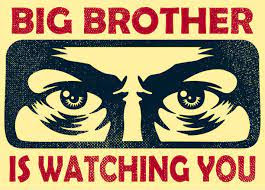
Big Tech wedded to Big Government has become Big Brother.
 
Every second of every day, the American people are being spied on by a vast network of digital Peeping Toms, electronic eavesdroppers and robotic snoops.
 
This creepy new era of government/corporate spying—in which we’re being listened to, watched, tracked, followed, mapped, bought, sold and targeted—has been made possible by a global army of techno-tyrants, fusion centers and Peeping Toms.


Tracking you based on your phone and movements: Cell phones have become de facto snitches, offering up a steady stream of digital location data on users’ movements and travels. For instance, the FBI was able to use geofence data to identify more than 5,000 mobile devices (and their owners) in a 4-acre area around the Capitol on January 6. This latest surveillance tactic could land you in jail for being in the “wrong place and time.” Police are also using 
cell-site simulators to carry out mass surveillance of protests without the need for a warrant. Moreover, federal agents can now employ a number of hacking methods in order to gain access to your computer activities and “see” whatever you’re seeing on your monitor. Malicious hacking software can also be used to remotely activate cameras and microphones, offering another means of glimpsing into the personal business of a target.
 
Tracking you based on your DNA. 
DNA technology in the hands of government officials completes our transition to a Surveillance State. If you have the misfortune to leave your DNA traces anywhere a crime has been committed, you’ve already got a file somewhere in some state or federal database—albeit it may be a file without a name. By accessing your DNA, the government will soon know everything else about you that they don’t already know: your family chart, your ancestry, what you look like, your health history, your inclination to follow orders or chart your own course, etc. After all, a DNA print reveals everything about “who we are, where we come from, and who we will be.” It can also be used to predict the physical appearance of potential suspects. It’s only a matter of time before the police state’s pursuit of criminals expands into genetic profiling and a preemptive hunt for criminals of the future.
 
Tracking you based on your face: Facial recognition software aims to create a society in which every individual who steps out into public is tracked and recorded as they go about their daily business. Coupled with surveillance cameras that blanket the country, facial recognition technology allows the government and its corporate partners to identify and track someone’s movements in real-time.

One particularly controversial software program created by Clearview AI has been used by police, the FBI and the Department of Homeland Security to collect photos on social media sites for inclusion in a massive facial recognition database. Similarly, biometric software, which relies on one’s unique identifiers (fingerprints, irises, voice prints), is becoming the standard for navigating security lines, as well as bypassing digital locks and gaining access to phones, computers, office buildings, etc. In fact, greater numbers of travelers are opting into programs that rely on their biometrics in order to avoid long waits at airport security. Scientists are also developing lasers that can identify and surveil individuals based on their heartbeats, scent and microbiome.
 
Tracking you based on your behavior: Rapid advances in 
behavioral surveillance are not only making it possible for individuals to be monitored and tracked based on their patterns of movement or behavior, including gait recognition (the way one walks), but have given rise to whole industries that revolve around predicting one’s behavior based on data and surveillance patterns and are also shaping the behaviors of whole populations. One smart “anti-riot” surveillance system purports to predict mass riots and unauthorized public events by using artificial intelligence to analyze social media, news sources, surveillance video feeds and public transportation data.
 
Tracking you based on your spending and consumer activities: With every smartphone we buy, every GPS device we install, every Twitter, Facebook, and Google account we open, every frequent buyer card we use for purchases—whether at the grocer’s, the yogurt shop, the airlines or the department store—and every credit and debit card we use to pay for our transactions, we’re helping Corporate America build a dossier for its government counterparts on who we know, what we think, how we spend our money, and how we spend our time.

Consumer surveillance, by which your activities and data in the physical and online realms are tracked and shared with advertisers, has become big business, a $300 billion industry that routinely harvests your data for profit. Corporations such as Target have not only been tracking and assessing the behavior of their customers, particularly their purchasing patterns, for years, but the retailer has also funded major surveillance in cities across the country and developed behavioral surveillance algorithms that can determine whether someone’s mannerisms might fit the profile of a thief.
 
Tracking you based on your public activities: Private corporations in conjunction with police agencies throughout the country have created 
a web of surveillance that encompasses all major cities in order to monitor large groups of people seamlessly, as in the case of protests and rallies. They are also engaging in extensive online surveillance, looking for any hints of “large public events, social unrest, gang communications, and criminally predicated individuals.” Defense contractors have been at the forefront of this lucrative market. Fusion centers, $330 million-a-year, information-sharing hubs for federal, state and law enforcement agencies, monitor and report such “suspicious” behavior as people buying pallets of bottled water, photographing government buildings, and applying for a pilot’s license as “suspicious activity.”
 
Tracking you based on your social media activities: Every move you make, especially on social media, is monitored, mined for data, crunched, and tabulated in order to form a picture of who you are, what makes you tick, and how best to control you when and if it becomes necessary to bring you in line. As The Intercept 
reported, the FBI, CIA, NSA and other government agencies are increasingly investing in and relying on corporate surveillance technologies that can mine constitutionally protected speech on social media platforms such as Facebook, Twitter and Instagram in order to identify potential extremists and predict who might engage in future acts of anti-government behavior.

 This obsession with social media as a form of surveillance will have some frightening consequences in coming years. As Helen A.S. Popkin, writing for NBC News, observed, “We may very well face a future where algorithms bust people en masse for referencing illegal ‘Game of Thrones’ downloads… the new software has the potential to roll, Terminator-style, targeting every social media user with a shameful confession or questionable sense of humor.”

Read the rest at:

Source: https://bit.ly/3VX6IYf

‘Twitter Files’ Make it Clear: We Must Abolish the FBI


SIDEBAR


Nowhere in the Constitution does it mention a right to NOT be offended.
 
Nonetheless, this imaginary right to not be offended seems to be trumping the First Amendment at every turn.
 
Make no mistake: these are acts of censorship, driven by a politically correct need to pander to those who are easily offended.
 
Justice Louis Brandeis was right when he warned, “A silent, inert citizenry is the greatest menace to freedom.”
 
The future of freedom in America rests with those who refuse to be silenced.


Why the Latest Attack on Our Power Grid is Panicking Leaders


Our power grid was just attacked by terrorists...


Now Homeland Security warns “more assaults are on the way”.


Attacks that could leave you without electricity, food, water, or worse.


Unless you act now.


Click Here to Discover ‘Why the Latest Attack on Our Power Grid is Panicking Leaders’ <<


33 Survival Items You Can Fit In Your Pocket


When most people think about disaster survival, they assume they'll need a big bag of heavy gear. When the disaster strikes, they frantically throw things into a bag only to realize they don't have nearly enough room and it already weighs over 50 pounds.

It's easy to get carried away. Most of us are so accustomed to living a luxurious lifestyle (compared to most of the world) that we assume it takes a lot of equipment and gear to survive.

It doesn't. All we really need are some basic necessities that make survival easier. Specially trained military operatives can be dropped into a field with nothing more than the clothes on their back and the gear tucked away in their vests and pockets...

33 Survival Items You Can Fit In Your Pocket


Why do you need an emergency radio?


·         . Just 60 seconds of hand cranking provides more than 45 minutes of radio

Radios: Having a couple small, portable radios on hand is going to be a must. If there’s a disaster, you’ll need to listen to the radio to get news about what is happening around you….grab a TacRight Emergency Radio:

https://www.ebay.com/itm/185665101473


What is a go bag?...


Be Prepared for
Emergency Situations

When Disaster Strikes - Everyone Should Have An Emergency Survival Kit Ready To Go!

If there’s one universal lesson we’ve learned from 2021 so far, it’s that we should all be better prepared for emergencies, no matter who we are.


 Bug Out Kits-Choose Your Level

  • 72-hour 4Patriot emergency food pack [25 year shelf life
  • 4Patriot Greens sample pack [Power supplement]
  • 3 Luna Nutrition bars [assorted]+Sunmaid raisin pouch
  • Cleaning Wipe Pack
  • Steel River Emergency Tent
  • Mini  First Aid kit
  • TRS 5N1 EDC folding tool
  • 3-package meal sampler
  • Paracord bracelet w/ compass
  • Reusable Face Mask
  • Personal Water Filter Straw
  • 11-Piece Emergency Survival Kit 

We offer several sized kits at:

PERSONAL SURVIVAL PACK-Tried N True ‘Save-Your-Butt’ Essentials

https://www.ebay.com/itm/185325277360

https://www.ebay.com/itm/255419941572


Free enterprise, limited government, individual freedom!


Contributors and subscribers enable the Poor Man Survivor to post 150+ free essays annually. It is for this reason they are Heroes and Heroines of New Media. Without your financial support, the free content would disappear for the simple reason that I cannot keep body and soul together on my meager book sales & ecommerce alone.

You Can’t Buy Life Insurance After You’re Dead

Not Prepared? 

That's Bad News...


You Can’t Buy Life Insurance After You’re Dead-Prepare NOW for Emergencies…


Support our efforts by shopping my storefront…

http://RetroGuy.net


A Smoking Frog Feature, Shallow Planet Production


Wednesday, May 18, 2022

The road to hell is paved with rules


Poor Man Survival

Self Reliance tools for independent minded people…

www.poormansurvivor.net

ISSN 2161-5543

A Digest of Urban Survival Resources


The road to hell is paved with rules

The old saying is, of course, that "the road to hell is paved with good intentions."

It is why we have come to a place where freedom to travel is not a right.

It is where we have submitted ourselves to what would have once been considered gross violations of our rights, for the "privilege" of using public roads that we pay for.

It is why official state sanction is needed to simply obtain the right to drive a car, much less move about.

Car commercials depict Americans as constantly driving off-road, flying across any terrain we wish without a care in the world. When was the last time you had that much freedom when driving?

Can you imagine the 19th century American pausing to make sure he had his papers before embarking on a trip? The man or family might consider whether they were properly provisioned — food, water, clothes, bedroll, etc. — but the notion of needing a license to legally travel the roads on horseback or in a wagon was unheard of.

Today, as many people begin planning summer travel by car, you are automatically aware that if you don't have the official signature and photograph-emblazoned imprimatur from government (also known as a driver's license), and properly approved permission from the corporatist masters (also known as proof of insurance) you're subject to fine and/or arrest should you get "caught" disobeying the hundreds of rules of the road.

We've surrendered our right to unfettered travel with hardly a whimper of protest. Now, traveling the nation's roads is considered a "privilege" rather than a right.

Worse, under implied consent, civil penalties and evidentiary consequences can be invoked on motorists who refuse to comply with tests when they've been arrested on suspicion of driving while impaired. Qualified immunity grants a police officer broad latitude to do whatever he feels necessary to enforce the law. Law enforcement officers are free from lawsuits for the performance of their jobs unless willful, unreasonable conduct is demonstrated.

When we were free

Writing for the Oklahoma City University Law Review (Summer, 2005) Roger I. Roots, J.D., Ph.D., says we reached this point over the course of a few decades after the introduction of the automobile.

"When automobiles were first introduced around the turn of the twentieth century, drivers relied on common law traditions that protected the right of every person to travel upon public roadways without a license," Root writes. "Courts repeatedly wrote of an individual's 'right to travel' by automobile and struck down regulations aimed at limiting the liberties of automobile drivers on constitutional grounds. With the passage of time, however, automobile regulators generally prevailed in legislative halls and courtrooms. Today, the public has accepted a degree of travel regulation which would have seemed almost tyrannical to nineteenth century Americans."

As Root explains it, courts prior to the 20th century generally held that public roadways were open to everyone. Their mode of travel was irrelevant and a requirement for licenses or specific travel permissions — had anyone deigned to attempt to require them — was considered a violation of rights. During the first 150 years of America's existence, no wagon or carriage licenses existed outside of the context of business licenses.

His research shows that not a single license law excluded any nonmerchant from traveling on the roads with wagons, horses or buggies of any kind. And courts suggested that no such requirement could be upheld even if it were to exist.

Prior to the 20th century the right to travel was understood to mean by any means of travel available. When bicycles hit the roads in the 1880s, attempts to regulate them through local ordinances were repeatedly struck down by the courts. In 1907 the Supreme Court of Iowa put travel by automobile in the same category as travel by horse, carriage or other vehicle.

"The right to make use of an automobile as a vehicle of travel," wrote Justice Ladd, "is no longer an open question. The owners thereof have the same rights in the roads and streets as the drivers of horses or those riding a bicycle or traveling by some other vehicle."

Likewise, the Minnesota Supreme Court, in 1910, held that, "There can be no question of the right of automobile owners to occupy and use the public streets of cities, or highways in the rural districts, [yet] they have no exclusive right."

But even then, the tide toward regulation was already turning. The New York Times, in 1902, editorialized that regulating the automobile by licensing drivers would be necessary. In 1905, citing "flagrant cases of reckless driving of automobiles," the Providence Journal opined that the people of Rhode Island and the rest of the country were becoming "incensed."

The more cars that took to the roads, the more regulations, rules and ordinances began to creep into the system, and courts began to allow them to stand. In 1916 the Supreme Court took a state's rights (or 10th Amendment) approach, upholding the power of each state to regulate the use of motor vehicles on its own highways, according to Root. This was done despite the prevailing view among jurists only a decade earlier that driving without unnecessary regulation was a fundamental right under the U.S. Constitution.

After the 1920s, federal courts were completely looking the other way regarding "the right to travel by vehicle of choice." Licensing and more regulation of travel became accepted and commonplace. Root tells us that since 1950, no court has described driving an automobile as a "right." The constitutional right to travel became increasingly interpreted not as a right to locomotion by the means of one's choice, but as a mere right to emigrate between states.

He writes that, "As Gregory B. Hartch pointed out in a recent law review article, this narrow interpretation of the right to travel came about more from judicial neglect than from any clear doctrinal justification. Today, traffic bureaus refer to driving a motor vehicle only as a privilege. In 1994, the California legislature passed the Safe Streets Act of 1994, stating expressly that 'driving a motor vehicle on the public streets and highways is a privilege, not a right.' The Fourth Appellate Court of California, in Buhl v. Hannigan, echoed this view by writing, 'there is no fundamental right to operate a motor vehicle; rather, driving is a privilege.' The North Dakota Supreme Court was even more explicit, when it stated in State v. Kouba, 'the use of the public highways is ... a privilege which a person enjoys subject to the control of the State.'"


So in 100 years we've gone from the right to unfettered and unregulated travel to a time where we are registered, our vehicles are registered and we're forced to purchase a product from a private company (insurance) all for the "privilege" of driving a vehicle.

We no longer have liberty to operate our own private property with no government restriction.

Beyond that, automakers now claim the software driving the computers that operate the cars we purchase belongs to them, and we just lease it from them. More drivel to make you accept that you will own nothing and be happy, as the architects of the attempted "Great Reset" being perpetrated on us have already admitted.

Do not let your mind be tricked into giving your rights away to the state. This has serious consequences.

The natural order of the state is a migration from freedom to tyranny. Remember this next time someone suggests more "common sense" laws to "ensure your safety" on the roads or anywhere else in your life. These laws ensure nothing but servitude to the state and submission to an "authority" that should be subservient and answer to "We The People," not the other way around.

Yours for the truth,

Bob Livingston
Editor, The Bob Livingston Letter®


RELATED:


Believe it or not, there’s a surprising variety of foods that can actually make you hungrier, and quite interestingly some of these foods are thought of as being healthy. They are frequently eaten for an afternoon snack, quick lunch, or breakfast that’s supposed to fill you up and keep you going for at least a few hours. But, they’re rarely up for the call of duty; instead, they can end up adding extra calories to your diet that your waistline and health could really do without.

Here are 10 foods that make you hungry and what to eat instead:

  • Chips and other salty snacks: Whether potato chips, tortilla chips, pretzels, or crackers, these easy-to-overconsume snack foods provide plenty of salt (an average of 170 mg per serving), which can make you thirsty. Unfortunately, it’s very common to confuse hunger for thirst. What’s more, because salty snacks are low in fiber or nutrition in general, they can lead you to keep going for more yet never really fill you up.
  • Snack bars made with artificial sweeteners: Non-calorie artificial sweeteners provide the sweet taste but not the actual sugar reward. Even though your taste buds may be deceived, your belly often isn’t, and you’re left craving the real thing.
  • White pasta: Unlike whole-grain pastas, white pastas are made with bleached-out, nutrient-stripped grains. Without the filling fiber, it’s easier to eat that large calorie-laden plate of pasta followed by seconds or even thirds. You aren’t a bottomless pit, but it can feel that way when you’re staring at a large plate of pasta.
  • Boxed cereal: Combine a grain with the fiber stripped away with a sugar bomb and a dash of thirst-inducing sodium, and what do you get? Foods that make you hungrier! For many, it’s tempting to skip the small bowl altogether and just consume the entire box. Even if you have just one small serving, because boxed cereals are made up of refined grains and sugars, they’re digested and absorbed quickly. That means they spike blood sugar, which is followed quickly by a crash that leaves you feeling ravenously hungry long before lunchtime.
  • White breads: While bread is good for filling you up quickly, it typically doesn’t provide long-lasting energy. This is true of most baked goods made with refined flour, such as donuts, croissants, and bagels. Once again, this is because much of the fiber has been stripped, leaving a food that spikes blood sugar, which raises insulin levels, which leads to a blood sugar crash. In other words, shortly after you just ate, you’re hungry again!
  • Low-fat yogurt cups: It’s tempting to believe all the advertising that tries to convince us that low-fat yogurt cups are a super healthy and filling option. Unfortunately, low-fat or fat-free yogurts often use sugar to overcome the change in texture caused by removing the fat. Some brands can have up to 20 grams of sugar per serving. Again, that big dose of sugar can cause a big energy spike followed by a crash and the desire for something to fill the hunger void soon after.
  • Store-bought granola bars: They look so healthy, but many granola bars are as high in sugar as a candy bar. All that sugar acts as an appetizer, making you even hungrier between 30 and 90 minutes after you consume that bar.
  • Rice cakes: Another common “diet food” is rice cakes. They’re crunchy, light, and low-calorie. As such, though, they aren’t going to fill anyone up. Now, if rice cakes are a go-to snack, there’s no reason to give them up. Just top them with a high-protein food like hummus, cottage cheese, or nut butter, so they have more staying power. This simple addition can transform them into a much healthier and more satisfying option.
  • High-sugar treats like cookies, cakes, and candies: It can be difficult to keep your fingers out of the cookie or candy jar, especially when faced with hunger pangs. But these sugary treats only lead to more cries from the belly to eat. Worse, they can heighten cravings.
  • French fries: Loaded with refined fat and high in sodium, French fries transform a highly satiating food into the opposite. Combine with the high sugar (in the form of high fructose corn syrup) found in most ketchups, and you get a double whammy.

No matter what food you choose, if you only have a small portion, especially right before a meal, it’s likely to stimulate your appetite or crank up your cravings. So, instead of choosing to munch on a small snack, it can help to eat a bit more of something that’s actually going to fill you up and fuel your energy levels for hours.

A great option to turn to is a protein smoothies.  They are very easy to make, here’s the exact template that my clients and I use:

  • 2 – 3 scoops of high-quality protein (providing 25 – 30+ grams of protein)
  • 2 fists full of veggies (I use spinach; I promise, it’s tasteless!)
  • 1 – 2 cupped handfuls of carbs (e.g., berries, banana, oats)
  • 1 – 2 thumb-sized portions of fats (e.g., mixed nuts, avocado, coconut oil)
  • Liquid (e.g., water, unsweetened almond milk or skim milk)
  • Ice (more ice for a thicker shake, less for a thinner one)

That’s it. Just put all of the ingredients in a blender and enjoy! It only takes a few minutes to put together, yet it keeps your appetite and cravings at bay for hours all while giving you sustained energy.

My Wife's Favorite - 2 scoops of vanilla protein, 1 cup of blueberries, add in some skim milk and a few ice cubes...blend and enjoy!  

My Favorite - 2 scoops of chocolate protein, 1 banana, small spoon of peanut butter, add in some skim milk and a few ices cubes... blend and welcome to what I call the peanut-butter cup shake!


Natural disasters don't wait for a convenient time

And you shouldn't wait to prepare either. In some cases there is little to no warning.

Prepare now to lessen the impact of disasters and emergencies


Remember:  You can’t buy life insurance after you’re dead!

When you think about packing up items to help you survive a natural or human-made disaster, you often think of backpacks. And there is good reason.

Backpacks are sturdy, lightweight, and with multiple pouches and pockets, they allow you to stow a large number of essentials. They come in expandable widths and sizes to fit even your smallest family members. And the best part is that your hands remain free with a backpack.


Super Emergency Survival Kit

  •  Solar phone charger
  • 72-hour 4Patriot emergency food pack [25 year shelf life
  • 4Patriot Greens sample pack [Power supplement]
  • 3 Luna Nutrition bars [assorted]+Sunmaid raisin pouch
  • Cleaning Wipe Pack
  • Steel River Emergency Tent
  • Mini  First Aid kit
  • TRS 5N1 EDC folding tool
  • 3-package meal sampler
  • Paracord bracelet w/ compass
  • Reusable Face Mask
  • Personal Water Filter Straw
  • 11-Piece Emergency Survival Kit 

And more…

https://www.bonanza.com/listings/Better-Safe-Than-Sorry-Super-Emergency-Survival-Kit/1143536466


CREATING AN EMERGENCY FOOD SUPPLY-FOOD SURVIVAL REPORTS-FREE

Compliments of: The PoorManSurvival team

https://1drv.ms/u/s!AgMpmQI6plfXiBqUHg-8SkA59L8f?e=YJZavA

Useful stuff      


Useful Resources from our storefront-See new items!

You Can’t Buy Life Insurance After You’re Dead-Prepare NOW for Emergencies…

A portion of our proceeds is donated to charitable Veterans groups such as Wounded Warriors & the VFW!


Support our efforts by shopping my storefront…

http://RetroGuy.net